
EDSS

Lifting and Shifting Engineering

Why Building Lifting and Shifting Is a Smarter Choice Than Reconstruction 

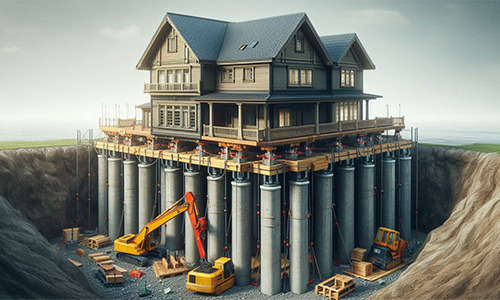
The construction industry is changing quickly, and the solutions available to property owners are changing just as quickly. One of the most innovative developments in recent years has been Building lifting and shifting engineering, which enables you to raise, realign, or relocate an existing structure without tearing it down. Rather than demolishing a building and rebuilding a new one, this technology enables you to keep, save money, and remediate structural problems with effective ingenuity. Table of Contents What Is Building Lifting and Shifting? Why Not Choose Reconstruction? Key Benefits of Building Lifting Lifting vs. Reconstruction: Cost & Time Comparison Safety and Technology Involved When to Consider Building Lifting Choosing the Right Experts Conclusion FAQs 1. What Is Building Lifting and Shifting? Building lifting and shifting service involves highly advanced engineering techniques that use hydraulic jacks and controlled support systems to raise or reposition an entire structure. This process allows you to: Increase the height of the building Correct tilting or sinking Strengthen weak foundations Move the structure to a safer location All without causing damage or compromising the original architecture. 2. Why Not Choose Reconstruction? Reconstruction seems like the simplest solution, but it may cost you: Truly expensive labor, materials, and approvals, Lengthy projects lasting many months, Total demolition leads to waste and more environmental damage, You lose the original shape and all of the sentimental qualities that made it adorable. Building or house lifting and shifting service provide the same or possibly better results without demolition, cost, and time delays. 3. Key Benefits of Building Lifting This modern technique has a great many advantages, making it a smart move for both residential and commercial properties. Key Benefits Include: More economical than reconstruction Saves significant time as compared to rebuild Strengthens and extends the life of your foundation Protects against flood and waterlogging Preserves the original structure, design, and memories Eco-friendly with minimal construction waste Enhances property value and safety Minimal disruption in everyday activities Applicable to heritage, old, and sentimental buildings Put simply, building lifting lets you upgrade without uprooting-gaining huge improvements without disturbing your existing structure. 4. Lifting vs. Reconstruction: Cost & Time Comparison Property owners usually consider only cost and time in deciding whether to have a building lifted or completely rebuilt. Both lifting and rebuilding restore or strengthen a property, but the method and the final outcome would differ.  The lifting option would:  Be a faster process and usually be completed in weeks  Require fewer materials  Have lower labor costs  Preserve the original structure  Not have to rebuild the whole building  The costs to do a complete reconstruction:  Would likely take months to complete  High cost of materials and manpower would be very expensive  Would require demolishing and removing debris  Take time for local authorities to review rebuild approvals  More environmental waste 5. Safety and Technology Involved It is a precision-based engineering operation in which, by using synchronized hydraulic jacks, steel beams, monitoring systems for load, and real-time leveling controls, experts can raise structures weighing hundreds of tons without causing cracks or instability. Basic safety precautions include: Detailed structural analysis Soil testing Load balancing calculations Continuous monitoring during lifting Post-lifting foundation strengthening This technology transformed building lifting into a predictable, controlled, and highly safe process. 6. When to Consider Building Lifting You might want to lift or raise your structure when: The ground level is too low and flooding occurs The foundation is compromised or has settled The structure is leaning or it is uneven The road level surrounding your property has increased You want to add a new floor or basement Heritage or sentimental structures need to be safeguarded You want to shift the entire footprint of the structure over as a part of the site planning It is now an accepted method with engineered assurance and is not experimental. 7. Choosing the Right Experts Building lifting is not regular construction work. It requires: Experienced structural engineers Advanced hydraulic equipment Strict safety protocols Skilled technicians The right team ensures your building is lifted safely, evenly, and without damage. Always check for: Previous projects Certifications Insurance and safety measures Technology used Client reviews Your building’s safety depends on the expertise of the professionals you hire. Conclusion As space, cost-effective and sustainable solutions become priorities, the undertaking of building lifting and shifting is viewed as a contemporary engineering revolution. Property owners can now address issues such as low elevation, water intrusion, foundation failure, or any sort of change needed without the need for demolition or construction With this method, you save money, protect the environment, preserve the design of your building and add to its existing strength safely, proven and effectively. Today, this has become one of the most advanced services offered by a modern building construction company. Plan to lift or shift your building? Call Us Frequently Asked Questions 1.How long does the building lifting process take? The duration depends on factors such as the building size, height of lift, soil condition, and weather. On average, residential projects may take 4 to 8 weeks, while larger commercial buildings might take longer.  2.Is building lifting safe? Yes. Building lifting is entirely safe when done by qualified experts. Zero damage and complete stability are guaranteed by proper structural analysis, foundation reinforcement, and real-time monitoring.  3.Will there be cracks or damage during the lifting process? Modern hydraulic jacks and skilled engineering supervision are used to lift the structure safely and uniformly, preventing tilts, cracks, and other structural damage.

Why Building Lifting and Shifting Is a Smarter Choice Than Reconstruction  Read More »
What Is Building Lifting and Shifting Engineering? A Beginner’s Guide

What Is Building Lifting and Shifting Engineering? A Beginner’s Guide

  As urban development evolves and land scarcity becomes a growing concern, engineers and builders are turning to innovative techniques to preserve existing structures. One such remarkable innovation is building lifting and shifting engineering. If you’ve ever wondered how a multi-story building can be raised or moved to a new position without demolition, this beginner-friendly guide will explain how it’s done and why it’s becoming increasingly popular. Table of Contents What Is Building Lifting and Shifting? Why Is Building Lifting and Shifting Done? How Does Building Lifting Work? How Does Building Shifting Work? Technologies & Tools Used Is Building Lifting or Shifting Safe? Cost of Building Lifting and Shifting Advantages of Building Lifting & Shifting Conclusion FAQ What Is Building Lifting and Shifting? Building Lifting service entails elevating a structure vertically from its foundation. This method is employed when the foundation has to be strengthened or changed, or when a building needs to be lifted to defend itself from flooding or other environmental risks. It is also utilized to construct new levels beneath an existing structure. Building Shifting is the process of transporting an entire structure horizontally to a new place. This could include shifting the building on the same site to make additional room or altogether moving it to a new location. Shifting is very useful when historical or irreplaceable buildings need to be preserved rather than demolished. These methods are a part of structural engineering and demand a combination of precision planning, advanced technology, and experienced manpower and the expertise of a building construction company. Why Is Building Lifting and Shifting Done? There are various practical and economic reasons to select this engineering solution: Flood protection In flood-prone areas, raising the building above ground level reduces water damage and increases safety. Foundation Strengthening or Reconstruction. If a building’s foundation is weakened or broken, it can be raised, repaired or rebuilt, and securely reinstalled. Basement or Cellar Construction. Building lifting is frequently utilized to add floors or basements beneath existing structures, providing useful space without changing the footprint. Road Level Changes If road levels around a building rise owing to urban planning, the structure may be raised to match the new height while maintaining accessibility. Legal or boundary adjustments. Sometimes a construction is partially or completely outside the authorized plot limitations. Shifting helps to remedy this without demolishing. Protecting Heritage Structures Historic structures can be relocated to safer or more appropriate settings while retaining their integrity. How Does Building Lifting Work? Building or house lifting service entails some technical procedures, undertaken under the guidance of structural engineers and technicians. Step-by-Step Summary: Structural Analysis: Engineers examine the building design, distribution of loads, and materials. Soil tests are also conducted to comprehend the state of the foundation. Jack Placement: A number of synchronized hydraulic jacks are located at strategic load-bearing locations on the structure. Steel beams can be inserted to give additional support. Gradual Lifting: The jacks are handled with care to raise the structure inch by inch, distributing the weight evenly to prevent cracks or damage. New Foundation Work: After being lifted, the new foundation is set, or the old one is altered or reinforced. Lowering & Alignment: The building is lowered slowly onto the new foundation with accurate alignment and rechecked for stability. How Does Building Shifting Work? Shifting a building is a bit more intricate than just lifting it, as it requires moving it horizontally. First, we start by lifting the structure slightly with hydraulic jacks, just like we would when lifting it. Next, we set up a track and roller system. We place heavy-duty rollers or rails underneath the building to ensure it can move smoothly. Then comes the gradual horizontal shifting. The structure is carefully moved along the prepared path using push-pull hydraulic systems or winches. Finally, once the building has been relocated, we set it down on a new foundation and make sure it’s perfectly aligned. Technologies & Tools Used Hydraulic Jacks & Pumps Steel I-beams and Channels Rollers, Rails, or Skid Systems Laser Alignment Equipment Load Monitoring Systems Concrete & Foundation Repair Tools Is Building Lifting or Shifting Safe?? Yes—when done by professionals. Building lifting and shifting is a precise engineering task that requires thorough planning, high-quality materials, and strict adherence to safety protocols. Cost of Building Lifting and Shifting Costs vary depending on: Size and height of the building  Type and strength of the foundation Distance (if relocation is required) Location, soil condition, and accessibility Advantages of Building Lifting & Shifting It saves on both time and costs.  No demolition or rebuilding has to be done.  It preserves the architecture.  Allows for legal alterations or expanding spaces.  This is quite an environment-saving option compared to building a new one. Conclusion Building lifting and shifting engineering is a smart, sustainable alternative to demolition and reconstruction. Whether it’s flood protection, structural reinforcement, or space optimization, this solution offers long-term value and flexibility for both residential and commercial properties. If you’re facing challenges like foundation damage, road-level mismatches, or land encroachment, consulting professional building lifting companies could help—lifting or shifting your structure might be the innovative solution you didn’t know existed. Looking for Building Lifting or Shifting Services? Call Us Frequently Asked Questions Lift a whole building without it being harmed. How is that reality? It is possible to lift buildings safely without damage with modern hydraulic systems, steel support beams, and expert supervision, but the distribution of loads and planning is critical.  How long does a building lifting or shifting project take? Time varies from a building’s size, structure, soil condition, and complexity. Around 2-4 weeks for a simple residential house lifting project. Shifting can prolong this for even up to 1-3 months.  What are the long-term benefits of lifting a building? Flood protection, strengthening the underpinning, adding space for use, such as a basement, thus prolonging the lifespan and value of the building.

What Is Building Lifting and Shifting Engineering? A Beginner’s Guide Read More »