
Introduction
Several old buildings exist within important commercial locations but fail to meet modern business requirements. Demolition and reconstruction are often considered the most conventional solution to this problem. That option is very costly, time-consuming, and harmful to the environment. Especially with the quarrying required for materials used in the construction process, and the resulting disruption of the habitat, as well as the air and noise pollution created.
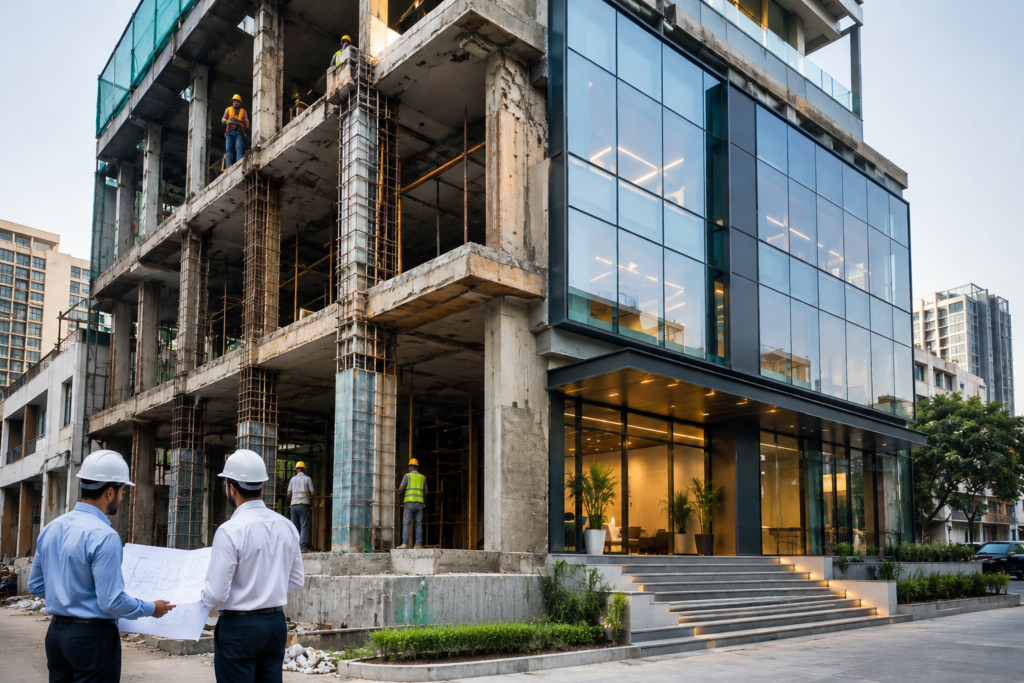
In the current environment, technological developments in engineering have changed the manner in which buildings are converted and reconstructed. Rather than demolishing existing buildings, current engineering technology provides ways for the redesigning, re-engineering, realigning and retrofitting of old buildings to make them extremely functional and productive commercial spaces. Through creative changes in the structure of buildings, load transferring technology, foundation improvement and building restoration, buildings can be converted to meet business needs in a modern setting.
Property owners looking for sustainable and economical options should consider working with an engineering and construction company to unlock the potential of the oldest buildings.
Table of Contents
- Why Demolition Is No Longer the Only Solution
- Understanding Engineering Metamorphosis
- Converting Residential Buildings into Commercial Properties
- Structural Reinforcement: The Foundation of Successful Transformation
- Preserving Character Through Restoration Engineering
- Creating Open Commercial Spaces Through Load Transfer Technology
- Correcting Structural Defects Before Commercial Conversion
- Realigning Tilted Buildings for Future Use
- Sustainability Benefits of Building Transformation
- Conclusion
- FAQ
1. Why Demolition Is No Longer the Only Solution
Many old buildings possess strong structural frameworks that can continue serving for decades with proper engineering intervention. Demolition often results in:
- High construction waste generation
- Increased project costs
- Extended project timelines
- Environmental impact
- Loss of usable structural components
Contemporary methodologies for engineering emphasize conservation and improvement of old buildings instead of demolition. The above methodology saves considerable amounts of material resources and decreases environmental disturbance. Advanced building transformation techniques can renovate buildings and ensure that old structures are transformed into contemporary business centers without compromising their strength.
2. Understanding Engineering Metamorphosis
One of the most innovative approaches to building transformation is the concept of engineering metamorphosis services. This process involves modifying the structural layout of a building to create more usable and commercially valuable spaces.
Engineering metamorphosis can include:
- Removing load-bearing walls through load transfer technology
- Creating large open-floor commercial areas
- Converting residential buildings into office spaces
- Transforming institutional structures into retail or business facilities
- Enhancing building functionality without major reconstruction
The main objective is to optimize the use of space while ensuring the structure’s stability. Through load redistribution, it becomes possible to change an inefficient design into one that allows for commercial activities.
3. Converting Residential Buildings into Commercial Properties
Many housing facilities are situated in areas that are becoming commercial. Instead of demolishing the buildings, they can be changed into profitable business premises. Common conversions include:
Office Spaces
The old houses can be renovated to become office spaces with open workstations, conference rooms, and reception areas.
Retail Establishments
Ground floors can be modified to accommodate retail stores while maintaining upper floors for administrative functions.
Healthcare Facilities
The residential buildings can be transformed into clinics, testing centers, or spas.
Hospitality Business
The old buildings can be renovated into boutique hotels, guesthouses, or co-working spaces.
Redesigning the existing building structure can help in meeting the modern commercial requirements while minimizing the costs of redevelopment.
4. Structural Reinforcement: The Foundation of Successful Transformation
Before any major building modification begins, engineers conduct detailed structural evaluations to assess the condition of:
- Foundations
- Columns
- Beams
- Load-bearing walls
- Roof systems
Re-structural engineering may involve:
- Foundation strengthening
- Additional support systems
- Load redistribution
- Column reinforcement
- Concrete repair techniques
This makes sure that the building can safely bear the new loads. Reinforcement of the building helps in increasing the life of the building.
5. Preserving Character Through Restoration Engineering
Not all old buildings should lose their historical identity during modernization. This is where ReStoration Engineering plays a critical role.
Restoration engineering focuses on:
- Preservation of Architectural Heritage
- Repairing Structural Deterioration
- Foundation Reinforcement
- Restoring damaged facades
- Improving building durability
Heritage and landmark buildings often have distinct characteristics within their architecture, which add value to the cultural environment. Through restoration methods, such characteristics can be conserved even as the building is upgraded for modern-day use.
Benefits include:
- Enhanced property value
- Heritage preservation
- Improved structural safety
- Sustainable redevelopment
- Long-term durability
Advanced restoration solutions can revive aging structures and make them suitable for offices, hospitality establishments, cultural centers, and commercial facilities
6. Creating Open Commercial Spaces Through Load Transfer Technology
The challenge with older structures is the presence of load-bearing walls and columns, which prevent interior flexibility.
Modern load transfer technology allows engineers to:
- Remove internal walls safely
- Relocate structural loads
- Create large, uninterrupted floor areas
- Improve customer movement and accessibility
- Enhance space utilization
Commercial establishments such as:
- Showrooms
- Restaurants
- Retail outlets
- Event halls
- Corporate offices
Often require open layouts. Through carefully engineered load transfer systems, existing structures can be adapted to meet these requirements without compromising safety.
7. Correcting Structural Defects Before Commercial Conversion
Older buildings frequently suffer from structural issues that must be addressed before transformation.
Common problems include:
- Foundation settlement
- Cracked walls
- Uneven floors
- Water damage
- Corrosion of reinforcement steel
Addressing these issues early prevents future complications and ensures compliance with modern safety standards.
Structural rehabilitation may include:
- Crack repair
- Foundation reinforcement
- Waterproofing solutions
- Soil stabilization
- Structural strengthening
These corrective measures create a reliable foundation for commercial redevelopment.
8. Realigning Tilted Buildings for Future Use
In some cases, old buildings may have developed noticeable tilting or settlement due to poor soil conditions, weak foundations, or water infiltration.
Realignment engineering involves:
- Detailed structural assessment
- Hydraulic lifting techniques
- Foundation reconstruction
- Soil stabilization
- Structural corrections
Advantages of realignment include:
- Avoiding demolition
- Restoring structural safety
- Extending building lifespan
- Protecting investment value
- Enabling commercial conversion
Buildings once considered unsafe or unusable can often be restored and repurposed through advanced realignment technologies.
9. Sustainability Benefits of Building Transformation
The issue of sustainability has come to dominate contemporary building. The benefits of adaptive reuse of existing structures outweigh demolition and reconstruction.
Reduced Construction Waste
Existing structural components are reused, reducing landfill waste.
Lower Material Consumption
Fewer new materials are required for renovation projects.
Reduced Carbon Footprint
The environmental impact associated with manufacturing and transporting construction materials is minimized.
Conservation of Natural Resources
Preserving existing structures reduces the demand for quarrying and extraction activities.
Faster Project Completion
Building transformation projects are often completed more quickly than new construction developments.
For businesses seeking environmentally responsible solutions, adaptive reuse represents a practical and sustainable investment strategy.
Conclusion
Turning old buildings into commercial establishments without any demolition work will revolutionize the future of construction and urban redevelopments. Rather than seeing these old buildings as a burden, the property owners could consider them as valuable assets that have a lot of potential yet to be tapped. With the help of engineering approaches like structural strengthening, load transfer techniques, restoration engineering, and realignments, old buildings can be converted to suit contemporary commercial needs.
From changing a home into offices or converting old buildings to commercial centers or even solving the problems of the buildings prior to redevelopment, there are many ways in which engineering solutions offer sustainable options to demolition works. By working with an engineering and construction company in Kochi, you will ensure that all projects done with such innovation will be handled with utmost precision and caution.
The future of commercial developments need not always be in building something new, but could also mean utilizing something old.
Unlock the Hidden Potential of Your Existing Building
Frequently Asked Questions
A majority of buildings have potential for change; all it requires is that a structural assessment proves that it can be safely modified.
Sometimes, yes; in many situations, transforming an existing structure is more cost-effective.
Engineering metamorphosis is a form of structural transformation of buildings aimed at enhancing their usability and increasing their commercial value.
This type of engineering contributes to the repair of structural defects, to preserving the architectural features, and improving its strength.
Yes, modern realignment methods enable engineers to restore the building’s stability.
Its contribution includes conservation of resources and reduction of carbon emissions.
Author

EDSS Ventures Limited is a technology-driven engineering and construction company established in 2003 and transitioned into a public limited company in 2022. The company specializes in innovative civil engineering solutions that focus on repairing, strengthening, and transforming existing structures instead of rebuilding them. Its expertise includes building restructuring, foundation strengthening, correction of tilted structures, lifting and shifting engineering, and restoration of heritage and monumental buildings. EDSS Ventures also delivers advanced waterproofing systems and vertical parking solutions with both automated and manual options. With a strong commitment to sustainability, the company adopts resource-efficient methods that minimize environmental impact while delivering high-quality, customized engineering outcomes.
